To be honest, this whole lvt flooring game… it's changed a lot in the last few years. It used to be, you wanted a floor, you got tile or wood, end of story. Now everyone’s talking about wear layers, embossed textures, click systems… feels like you need an engineering degree just to spec a floor. Have you noticed how much the demand for waterproof stuff has gone up? People are putting it in kitchens, bathrooms… even garages! It’s all about life-proof flooring, apparently.
It’s a good thing, I guess. More options, more customers. But it also means more potential for headaches. I encountered this at a factory in Jiaxing last time, they were bragging about their ‘ultra-realistic wood grain’… looked like plastic wood to me, honestly. The devil's in the details, right? And those details… they're easy to mess up.
What people think they want and what they actually want are two different things. I was on a site last week, they’d ordered this fancy, super-matte finish. Looked beautiful in the showroom. But under construction lights, with all the dust flying around… it showed every single footprint. You wouldn’t believe it. They ended up switching to a slightly glossier finish, more practical.
The Changing Landscape of lvt Flooring
Strangely enough, the biggest driver of change right now isn’t fancy new technology. It’s sustainability. Everyone’s asking about recycled content, phthalate-free options, low VOC emissions… which is good. It forces manufacturers to up their game. But it also adds cost, naturally. And verifying those claims… that’s a whole other can of worms.
The market is also segmented like crazy. You've got the bargain basement stuff coming out of who-knows-where, the mid-range options that are decent for residential, and then the high-end stuff that’s built to last in commercial spaces. It’s not a one-size-fits-all world anymore, that’s for sure.
Design Pitfalls and Hidden Challenges
One thing I’ve noticed is the over-reliance on visuals. People see a beautiful picture of an lvt flooring floor and immediately want it. But they don't think about the subfloor preparation, the expansion gaps, the underlayment… all the stuff that makes or breaks the installation. Anyway, I think it’s up to us, the folks on the ground, to manage expectations.
And the embossed-in-register textures… sometimes they look great, sometimes they just look cheap. It really depends on the quality of the printing and the depth of the embossing. It's a surprisingly tricky thing to get right.
Another thing – the click systems. They’re supposed to make installation easier, but if the flooring isn't perfectly flat, they can be a nightmare to lock together. I’ve spent hours on my knees, coaxing those edges together. Don’t even get me started.
Core Materials and On-Site Handling
The base material...usually PVC, but there's also SPC – stone plastic composite. Feels completely different, heavier, more rigid. Smells different too, more…mineral-y, I guess. PVC has that plasticky smell, you know? Handling them is different too. SPC is tougher, less prone to scratching during installation.
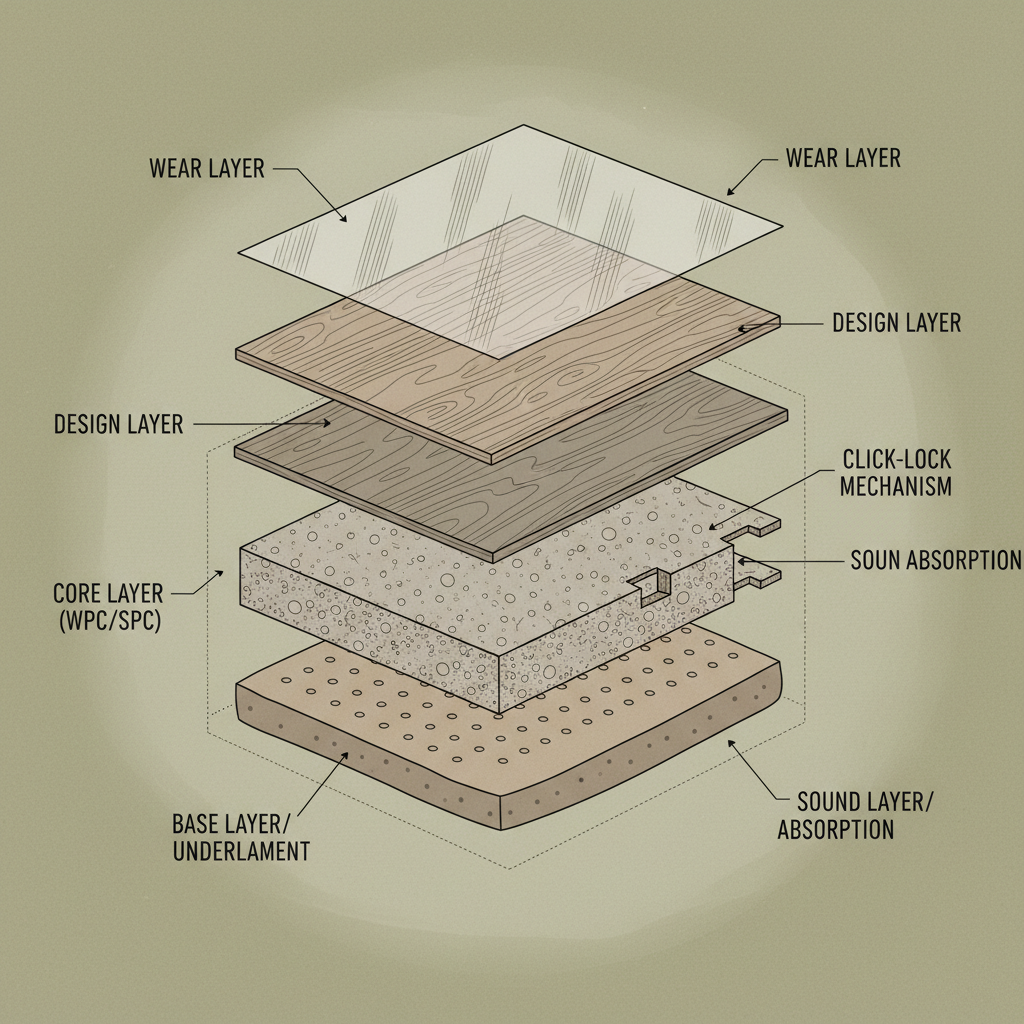
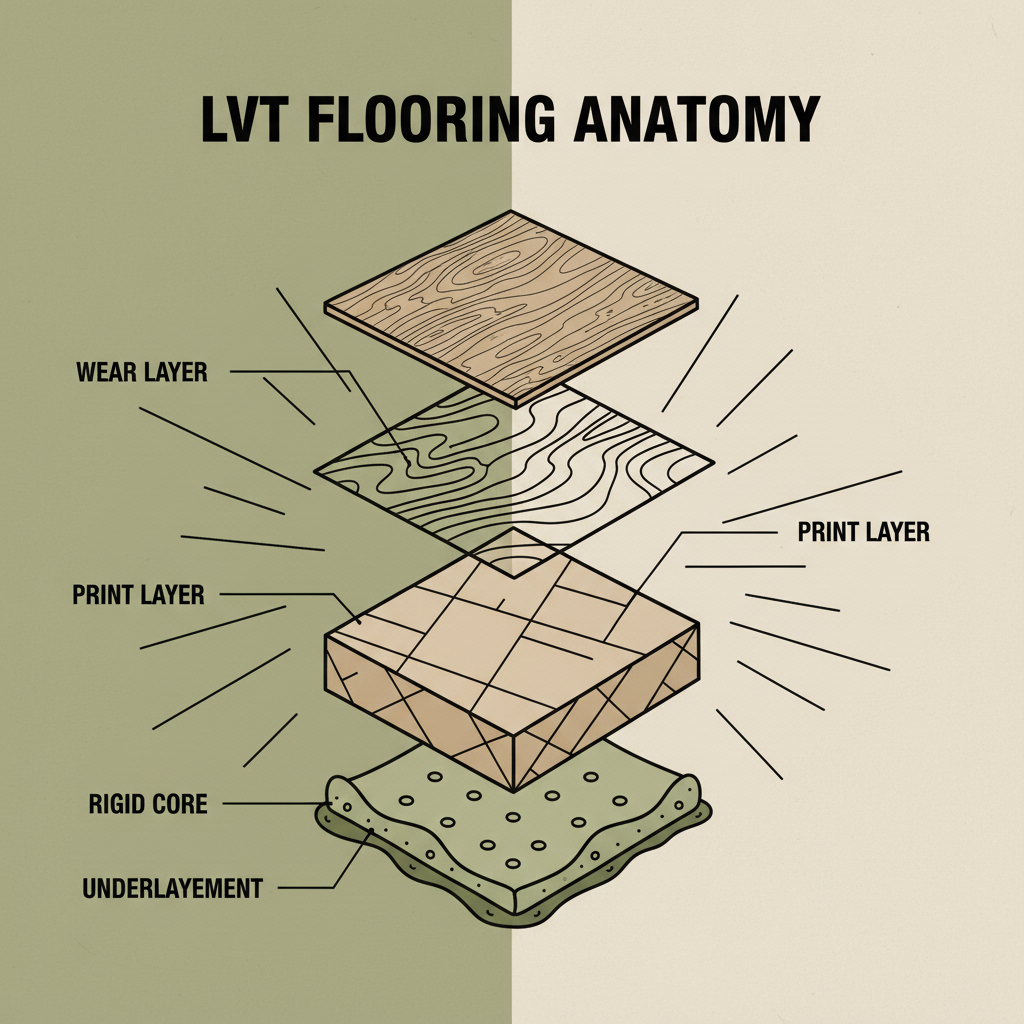
The wear layer is critical. That’s the transparent top coat that protects the image layer underneath. You get different thicknesses, measured in mils. Higher mil means more durability, but also higher cost. I’ve seen cheap stuff wear through in a year, especially in high-traffic areas. It’s not pretty.
And don’t underestimate the importance of a good underlayment. It provides cushioning, sound absorption, and helps to level out minor imperfections in the subfloor. There’s a lot of variation in quality out there. Some are just glorified plastic sheeting.
Real-World Testing and Performance
Forget the lab tests. The real test is how it holds up to a dropped wrench, a rolling office chair, a spilled cup of coffee. I’ve seen flooring fail spectacularly under those conditions. That's why I carry a small toolbox with me on every site – a hammer, a screwdriver, and a few spare pieces of lvt flooring for impromptu testing.
I also like to do the ‘scratch test’ with a coin. Sounds crude, but it’s surprisingly effective. If a coin can scratch the wear layer, that’s a bad sign.
lvt Flooring Performance Metrics
Actual Usage Patterns vs. Assumptions
You know, designers always assume people will treat their floors with respect. But that's rarely the case. Especially in commercial settings. Lots of foot traffic, rolling carts, dropped objects… it takes a beating. Later... Forget it, I won't mention it.
I’ve seen restaurants use lvt flooring in kitchens, thinking it would be easier to clean than tile. It is, to a point. But constant exposure to grease and hot water eventually takes its toll. It dulls the finish, makes it prone to staining.
Advantages, Disadvantages, and Customization
The biggest advantage? Cost, plain and simple. It’s cheaper than hardwood, tile, or stone. And it’s easier to install. The downside? It doesn't have the same feel underfoot. It feels…synthetic. And it’s not as durable as some other options.
But it can be customized. Last month, that small boss in Shenzhen who makes smart home devices insisted on changing the interface to , and the result was... well, a lot of wasted material and a delayed project. He wanted a custom color match for his brand. It was a pain, but we managed to pull it off. That's the benefit of working with some manufacturers - they are willing to accommodate specific requests.
A Customer Story and Lessons Learned
I’ve learned a lot over the years. Mostly that communication is key. Get the details right upfront. Manage expectations. And always, always have a contingency plan.
One project that sticks with me was a school renovation. They wanted a colorful, durable lvt flooring floor for the hallways. We recommended a heavy-duty SPC with a thick wear layer. It looked great when it was installed. But a few months later, the janitor started using harsh chemicals to clean it. It stripped the finish and left it looking dull and lifeless. Lesson learned: you can specify the best materials in the world, but if the end-user doesn’t know how to care for them, it’s all for nothing.
Anyway, I think the key thing to remember is that lvt flooring is a tool. It's not a magic bullet. It has its strengths and weaknesses. And it's up to us, the professionals, to use it wisely.
Core Performance Factors of lvt Flooring
| Material Composition |
Wear Layer Thickness (mils) |
Impact Resistance (Scale 1-10) |
Water Resistance (Scale 1-10) |
| 100% PVC |
12 |
6 |
7 |
| SPC Core |
20 |
8 |
9 |
| WPC Core |
15 |
5 |
8 |
| Recycled PVC |
10 |
5 |
6 |
| Virgin PVC |
18 |
7 |
8 |
| Enhanced SPC |
30 |
9 |
10 |
FAQS
Honestly, it depends on the concrete. You need it completely level, clean, and dry. Patch any cracks with a self-leveling compound, vacuum up all the dust, and use a moisture meter to make sure it’s below 3%. If it’s not, you're asking for trouble down the line. We’ve seen floors bubble and peel when moisture is ignored. Prime it afterward to help with adhesion, too – don't skip that step.
It can be, if you choose the right product. Look for 100% waterproof lvt flooring, specifically designed for wet environments. Even then, pay attention to the seams. You'll want to use a waterproof sealant around the edges of the flooring, especially around the toilet and shower. And don't expect it to last forever – constant exposure to moisture will eventually take its toll.
Click-lock is easier and faster to install, great for DIYers. But it can be less stable, especially in high-traffic areas or over uneven subfloors. Glue-down is more permanent and provides a more solid feel. It takes more skill to install properly, but it's generally more durable and less prone to movement. It really depends on your skill level and the specific application.
Simple stuff. Regular sweeping and vacuuming to remove dirt and debris. Damp mop with a pH-neutral cleaner – avoid abrasive cleaners, they'll scratch the finish. And use felt pads under furniture legs to prevent scuffs. Honestly, most people overcomplicate it. Just be sensible and treat it with a little respect.
Some can, but you need to check the manufacturer's specifications. Not all lvt flooring is compatible with radiant heat. You also need to make sure the heat is regulated and doesn’t exceed the maximum temperature recommended by the manufacturer. Otherwise, you risk warping or damaging the flooring. It's a risk, to be honest.
That varies wildly depending on the quality of the flooring, the amount of traffic, and how well it's maintained. A decent quality lvt flooring floor in a residential setting should last at least 10-15 years. In a commercial setting, you might get 5-10 years out of it. But you're looking at replacement eventually – it's just a fact of life.
Conclusion
So, there you have it. lvt flooring has come a long way. It’s a versatile, affordable, and relatively easy-to-install flooring option. But it’s not a perfect solution. It requires careful planning, proper installation, and regular maintenance. And even then, it’s not going to last forever.
Ultimately, whether this thing works or not, the worker will know the moment he tightens the screw. That’s the truth of it. We can talk about specs and materials all day long, but at the end of the day, it’s about getting it right on the job site. That’s where the real magic happens.