You know, these days everyone's talking about prefabrication. Modular this, prefabricated that. Honestly, it’s a bit overhyped. I spent two weeks last month at a site in Shanghai where they were trying to rush a prefabricated bathroom installation…a disaster. Everything was off by millimeters, the plumbing didn't line up. It’s not about if it's prefabricated, it’s about how it’s prefabricated. And a lot of it comes down to the accessories, the little stuff people overlook. Laminate flooring accessories, specifically. Seems simple, right? Not so fast.
I've been doing this for twenty years, and I've seen trends come and go. Right now, it’s all about integrated systems - skirting boards with built-in cable management, underlayment with soundproofing already attached, that sort of thing. The push for faster installation is driving a lot of it. But speed isn't everything. You can rush, but if it doesn't last, what's the point? We are seeing more demand for moisture-resistant accessories too, especially around kitchens and bathrooms. People think laminate is waterproof, it's not. The joints are where the trouble starts, and the accessories have to compensate.
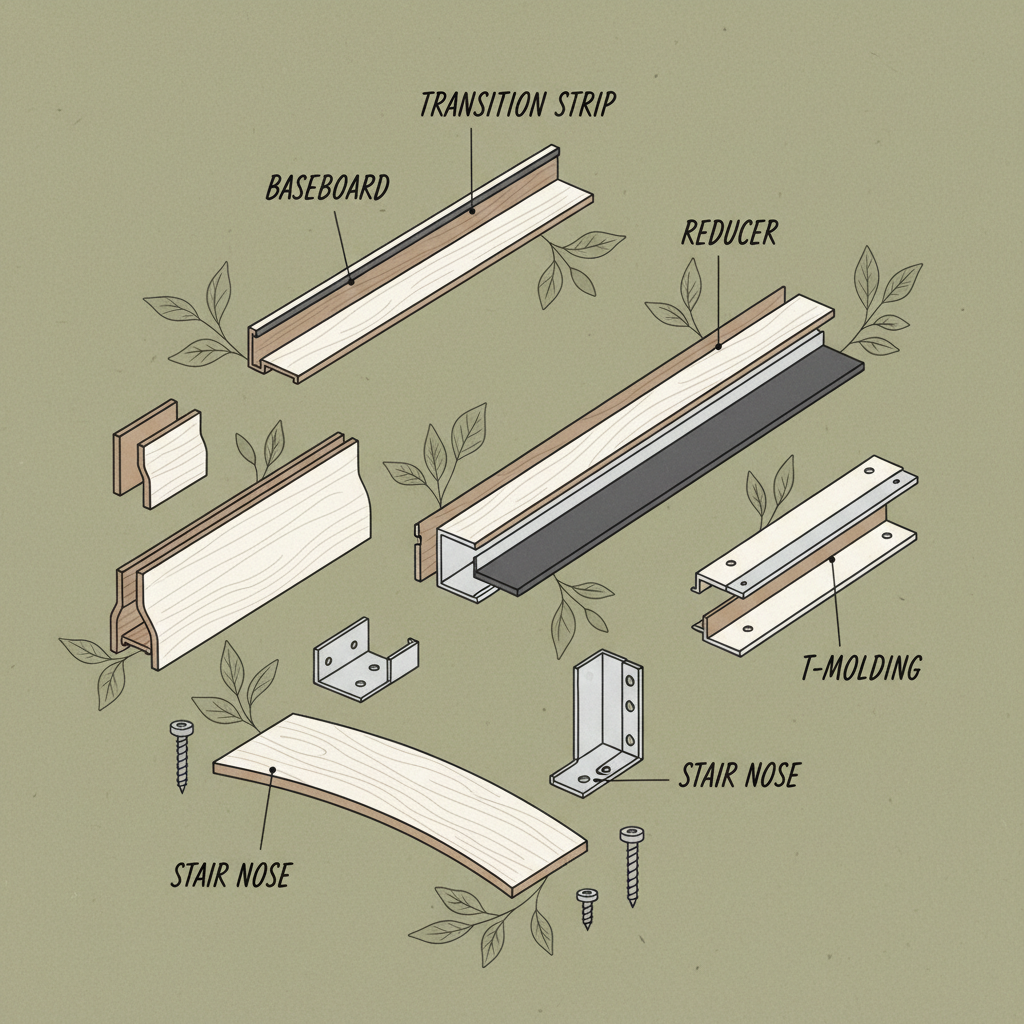
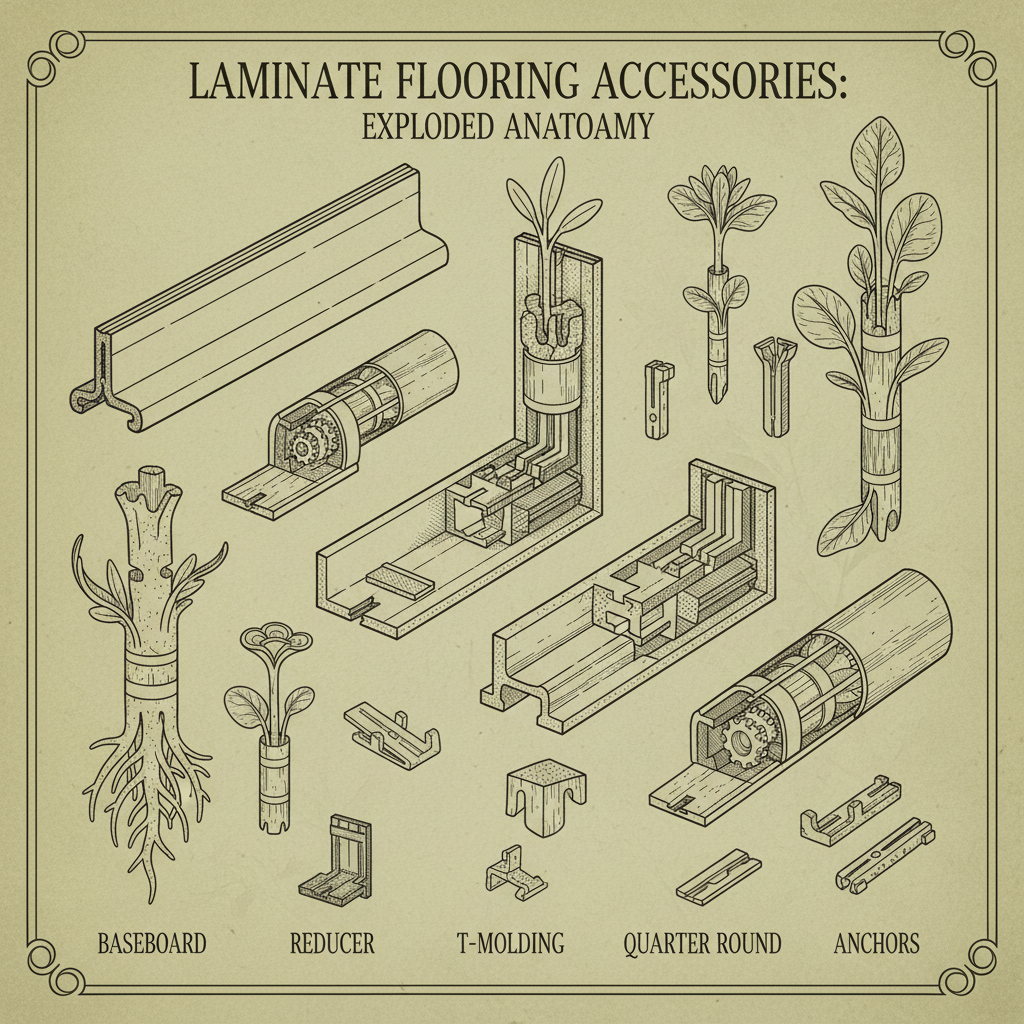
It's a surprisingly complex little world, laminate flooring accessories. People don't realize how much thought goes into things like transition strips, end caps, and even the little foam spacers. You get cheap stuff, it crumbles the first time you try to use it. It's infuriating.
The Current Landscape of Laminate Flooring Accessories
To be honest, the market is flooded with stuff from overseas. Mostly China. Some of it is decent, some of it…well, let's just say you get what you pay for. I encountered a batch of skirting boards at a factory in Dongguan last time that smelled strongly of formaldehyde. Not good. We're seeing a lot more WPC (wood plastic composite) accessories too. They’re more stable than MDF, especially in humid environments. But they can feel a bit…plasticky, you know? It's a trade-off. People want durable, but they also want it to feel right.
The demand for matching accessories is also up. Customers don’t want a perfect floor and then a clashing skirting board. It's all about the aesthetic now. Everything needs to be coordinated. And the colors...they're getting more sophisticated. Not just the standard oak and walnut anymore.
Design Pitfalls and Common Mistakes
Have you noticed how many manufacturers skimp on the quality of the clips used to hold the flooring together? They're tiny, plastic, and they break all the time. It's frustrating. A good clip should snap in firmly and stay put. Not shear off after a couple of installations. Another thing - transition strips. People underestimate how much traffic those things take. They need to be robust. And the angle...getting the angle right is crucial. Too steep, and people trip. Too shallow, and it looks sloppy.
Strangely, I see a lot of designers specify accessories without considering the subfloor. If the subfloor is uneven, even the best accessories won’t save you. You need proper leveling compound, and you need to check the flatness. It’s basic stuff, but it’s often overlooked.
And don’t even get me started on the adhesive. Wrong adhesive, and the whole thing can come undone. You need to match the adhesive to the flooring and the subfloor. It’s not one-size-fits-all.
Material Science and On-Site Handling
The MDF stuff…it’s okay for dry areas, but it swells like crazy if it gets wet. We’re seeing more HDF (high-density fibreboard) which is a bit better, more resistant. But honestly, the real difference maker is the coating. A good melamine coating is essential. It needs to be scratch-resistant and easy to clean. I always give the material a quick sniff test on site. If it smells too strongly of chemicals, I’m wary.
The PVC accessories, they feel solid, but they can become brittle in cold weather. I saw a whole shipment of skirting boards crack during transport last winter because it got too cold. And the WPC, it’s heavier than you think. It requires more effort to cut and install. You really need a good saw with a fine-tooth blade.
Anyway, I think proper storage is just as important. Keep everything dry and protected from sunlight. And don't stack it too high. You don't want to damage the material. A damp warehouse is a recipe for disaster.
Real-World Testing and Performance
Forget the lab tests. They don’t mean much in the real world. I test stuff on site. I drop things on it, I spill things on it, I try to scratch it with a screwdriver. Sounds brutal, but that’s what it takes. We once had a client who insisted on a very light-colored flooring. It looked beautiful in the showroom, but it showed every scratch and stain within a week. Lesson learned.
We also do impact resistance tests. I literally drop a weight from a certain height onto the flooring and see if it dents. It’s not scientific, but it gives you a good idea of how well it will hold up to everyday wear and tear.
Laminate Flooring Accessories Performance Ratings
User Behavior and Unexpected Applications
You wouldn’t believe some of the things people try to do with these accessories. I had a guy once who wanted to use a transition strip as a door stop. Didn’t work, obviously. And another who tried to glue a skirting board directly onto wallpaper. Seriously. People just don't think things through.
We're also seeing more DIY installations, which is good and bad. Good because people are taking ownership of their homes. Bad because they often make mistakes. They underestimate the importance of proper preparation and installation techniques.
Advantages, Disadvantages, and Customization
The biggest advantage of laminate flooring accessories is the cost. They’re relatively inexpensive compared to hardwood accessories. But that cost savings comes with a trade-off in durability and aesthetics. The other benefit is the wide range of styles and colors available. You can pretty much match any flooring.
Customization? Sure, you can get custom-colored accessories, but it’s expensive. Last month, that small boss in Shenzhen who makes smart home devices insisted on changing the interface to , and the result was a three-week delay and a lot of headaches. He wanted to integrate the flooring accessories with his smart home system. It sounded good in theory, but it was a logistical nightmare.
You can also get accessories with custom profiles, but again, it adds to the cost.
A Case Study: Shenzhen Smart Home Challenge
So, back to that guy in Shenzhen. He was building a showroom for his smart home products, and he wanted everything to be seamless. He wanted the flooring accessories to be flush with the walls and the flooring. He even wanted them to be able to control the lighting. It was…ambitious.
We spent weeks trying to figure out a solution. We tried different adhesives, different installation techniques, different accessories. Nothing worked perfectly. The tolerances were too tight. The materials were too unforgiving. Eventually, we had to compromise. We ended up using custom-made aluminum profiles with embedded LED strips. It looked good, but it was expensive.
The lesson? Don’t overcomplicate things. Sometimes, the simplest solution is the best.
Accessory Material Comparison: Performance & Cost
| Material |
Durability (1-10) |
Cost (USD/meter) |
Moisture Resistance (1-10) |
| MDF |
4 |
1.50 |
2 |
| HDF |
6 |
2.00 |
4 |
| WPC |
8 |
3.50 |
7 |
| PVC |
7 |
2.50 |
6 |
| Aluminum |
9 |
6.00 |
9 |
| Solid Wood |
10 |
8.00 |
5 |
FAQS
Honestly? Not reading the instructions. Sounds simple, but you'd be surprised how many people just dive in without bothering to look at the manufacturer's recommendations. Proper acclimation is huge, too. Let the accessories sit in the room for a few days before installation. Otherwise, you’ll run into issues with expansion and contraction. It saves headaches later.
Not necessarily. Price doesn't always equal quality. Sometimes you’re just paying for a brand name. I’ve seen cheap accessories that perform just as well as the expensive ones. It's about finding the right balance between price and performance. Do your research and read reviews.
It depends on the subfloor and the type of laminate flooring you’re using. If your subfloor is uneven, you'll need a thicker underlayment to provide cushioning and levelness. If you need soundproofing, look for an underlayment with a high STC rating. And make sure it's compatible with your flooring. Some laminates require a specific type of underlayment.
A good tapping block, a rubber mallet, a measuring tape, a saw (preferably a fine-tooth saw), and a utility knife. A spacer tool is also helpful for maintaining consistent gaps around the edges. And don't forget safety glasses. You don’t want sawdust in your eyes.
Sometimes. Transition strips and end caps can often be used with other types of flooring, but it depends on the height and profile. Skirting boards are usually designed specifically for laminate flooring. You can try to adapt them, but it might not look great. Be mindful of compatibility.
A damp cloth is usually enough. Avoid using harsh chemicals or abrasive cleaners. They can damage the surface. For stubborn stains, try a mild detergent diluted in water. And always dry the accessories thoroughly to prevent water damage. Preventative care is key.
Conclusion
Ultimately, all these fancy materials and designs, all the lab tests and marketing hype...they don't really matter. It all comes down to proper installation and a bit of common sense. You can have the highest quality accessories in the world, but if they're installed incorrectly, they won't last. And a lot of it comes down to the little details - the gaps, the angles, the adhesive.
So, take your time, do your research, and don’t be afraid to ask for help. And remember, whether this thing works or not, the worker will know the moment he tightens the screw. laminate flooring accessories are a subtle art, and mastering it takes experience, patience, and a healthy dose of skepticism.