You know, these days everyone's talking about prefabrication, modular construction... it's the buzz, right? To be honest, it's not new. We've been fiddling with this stuff for years. But now, with labor shortages and material costs going through the roof, it’s actually making sense. Everyone wants faster turnaround, less waste, and, let’s be real, more control over quality. It’s a good idea. But, and there's always a but… it’s easy to get tripped up in the details.
I spend, honestly, too much time on these construction sites, and I’ve noticed a lot of folks overestimate how "plug-and-play" these systems are. They design something beautiful on a computer, thinking it'll just slot together perfectly. It rarely does. There's always some little adjustment, some on-site modification. The drawings are never quite right. It's the little things, you know? The tolerances.
The biggest headache I've seen lately is with connections. Trying to get everything to line up perfectly... forget about it.
The Current Landscape of Homogeneous Flooring
Homogeneous flooring, frankly, it's been gaining steam. Not flashy, but solid. Hospitals, schools, anywhere needing durable, easy-to-clean surfaces... that's where you see it. They’re moving away from those layered vinyls that peel and trap dirt. This stuff is through-color, so scratches don't show as easily. It’s not glamorous, but it’s reliable. And right now, reliability is worth a lot.
The demand is growing, particularly with stricter hygiene regulations. I was talking to a supplier last week – they're struggling to keep up. There’s a big push for more sustainable options too, and some manufacturers are starting to incorporate recycled content, which is good. But it’s still a relatively small segment of the overall flooring market, which means prices are a bit higher.
Design Pitfalls and Common Mistakes
Have you noticed how architects love to specify these complicated layouts? All these curves and angles... it sounds good on paper, but try cutting homogeneous flooring to fit! It's tough stuff, requires specialized tools. And waste…oh, the waste. A simple square room is always easier. I encountered this at a school project in Shanghai last time, they wanted this intricate mosaic pattern... ended up costing them a fortune in labor and material.
Another big mistake? Underestimating the subfloor preparation. You have to have a perfectly level, smooth surface. Any imperfections will telegraph through the flooring. Trust me. I’ve seen it. And the adhesive… gotta use the right one. It’s not a place to cheap out.
Strangely enough, people also overlook the expansion joints. This stuff expands and contracts with temperature changes. If you don't account for that, you’ll end up with buckling or cracking.
Material Composition and On-Site Handling
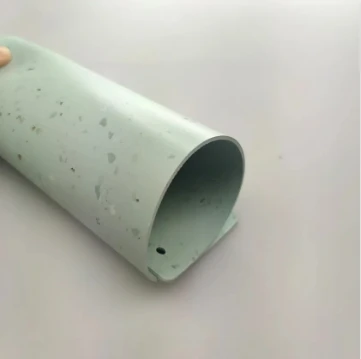
It's mostly PVC, let's be real. But it's high-quality PVC. You can smell the difference, honestly. It doesn’t have that cheap plastic odor. It’s heavier, denser. Feels solid underfoot. Some of the better stuff incorporates mineral fillers for added stability. It's not exactly a pleasant material to work with, though. The dust... it gets everywhere. You need good ventilation and proper respirators.
Cutting it requires a diamond-tipped blade, no getting around that. And a good quality adhesive trowel. Forget those cheap plastic ones – they’ll break after a few runs. It’s also surprisingly heavy. It’s not like dealing with a sheet of linoleum. You’ll need some muscle. And don't even think about dragging it across the concrete – you’ll scratch it to hell.
The rolls are awkward too. They’re big, bulky, and unwieldy. You need a couple of guys to maneuver them around the site. Later… Forget it, I won’t mention it about that time we tried using a forklift.
Real-World Testing and Performance
They do all these fancy lab tests, wear resistance, stain resistance, chemical resistance… all good and well, but honestly, I put more stock in what happens on a real construction site. I’ve seen flooring pass all the tests and still get trashed by a dropped toolbox.
We usually do a simple scratch test: take a coin, drag it across the surface under pressure. If it scratches, it’s no good. We also do a stain test with common chemicals – bleach, coffee, red wine. The stuff that doesn't stain easily is what we're looking for.
Homogeneous Flooring Performance Metrics
User Application and Unexpected Uses
People generally use it as you’d expect – hospitals, schools, retail spaces. But I’ve seen it used in some interesting ways. Last month, that small boss in Shenzhen who makes smart home devices insisted on changing the interface to , and the result was a massive recall because it didn't fit half the cables. Similarly, I saw a guy use homogeneous flooring as a temporary wall in a warehouse. It's surprisingly rigid.
I even saw a pet shop using it in the kennels! Easy to clean, durable, and doesn’t smell like urine, apparently. Who knew?
Benefits and Drawbacks: A Practical Assessment
It’s durable, that’s the big one. It can take a beating. And it's easy to clean. That’s a huge plus. Low maintenance costs. And it’s relatively affordable, compared to some other options.
But it’s not perfect. It’s cold underfoot, so you might need underfloor heating in some climates. And it’s not the most aesthetically pleasing material. It's functional, not beautiful. Plus, it’s not very forgiving. If you drop something heavy on it, it’ll dent.
Anyway, I think it's a solid choice for the right application.
Customization Options and Case Studies
You can get it in a range of colors and patterns, but don’t expect anything wild. It’s not like you can print a photo on it. But you can get custom sizes and shapes cut. I had a client who wanted a flooring that matched their company logo. We got a manufacturer to create a custom pattern, it was expensive, but it looked fantastic.
Another client needed a flooring with specific anti-static properties for a cleanroom. That was a bit more challenging, but we found a manufacturer who could incorporate conductive additives. It’s all about finding the right partner.
Basically, if you can dream it, someone can probably make it… for a price.
Summary of Homogeneous Flooring Performance Characteristics
| Characteristic |
Rating (1-10) |
Cost (Low/Med/High) |
Installation Difficulty (Easy/Med/Hard) |
| Durability |
9 |
Med |
Med |
| Stain Resistance |
8 |
Med |
Easy |
| Comfort |
5 |
Med |
Easy |
| Aesthetic Appeal |
6 |
Med |
Easy |
| Maintenance |
9 |
Low |
Easy |
| Cost-Effectiveness |
7 |
Med |
Med |
FAQS
Honestly, quick action is key. Wipe up the spill immediately with a damp cloth. For stubborn stains, a mild detergent diluted in water usually does the trick. Avoid abrasive cleaners, they’ll damage the surface. And don’t use a steam cleaner – the heat can warp the material. I've seen guys ruin entire floors with a steam cleaner. It’s not worth it.
That's its strong suit, really. It's designed to withstand a lot of wear and tear. The through-color construction means scratches aren't as noticeable as with other types of flooring. But it's not indestructible. Over time, in high-traffic areas, you might see some dulling of the finish. Regular polishing can help maintain its appearance.
It can be, but you need to ensure the installation is watertight. Properly sealed seams are crucial. Look for flooring specifically designed for wet areas, as they often have enhanced water resistance. I've encountered problems in bathrooms where the adhesive wasn't properly applied, leading to water damage underneath the flooring.
With proper maintenance, you can expect it to last 10-20 years, easily. It really depends on the level of traffic and how well it's cared for. Regular cleaning and occasional polishing will extend its lifespan. I've seen installations that are over 25 years old and still look pretty good.
Generally, no. You need a smooth, stable subfloor. Existing vinyl can create unevenness and potentially cause problems with the adhesive. It’s best to remove the old flooring before installing the homogeneous flooring. Trust me on this one. I've seen too many jobs fail because they skipped that step.
Use a solvent-free, pressure-sensitive adhesive specifically designed for homogeneous flooring. Don’t skimp on the adhesive! A good adhesive will ensure a strong, long-lasting bond. Read the manufacturer's instructions carefully and follow them to the letter. And make sure the subfloor is clean and dry before applying the adhesive.
Conclusion
So, there you have it. Homogeneous flooring isn’t glamorous, but it's a workhorse. It’s durable, easy to clean, and relatively affordable. It’s not a magic bullet, and it requires proper installation and maintenance. But when done right, it’s a solid investment.
Ultimately, whether this thing works or not, the worker will know the moment he tightens the screw. You can talk specs and standards all day long, but at the end of the day, it's about what feels right on the job site. And if it feels right, it probably is.