The commercial flooring sector is currently witnessing a significant transition toward high-performance composite materials, driven by the need for durability and rapid installation. Among these, wholesale spc flooring has emerged as a primary focus for B2B procurement due to its unique blend of stone polymer stability and vinyl versatility.
This shift is largely motivated by the increasing demand for waterproof, wear-resistant surfaces in high-traffic environments such as hospitals, universities, and retail hubs. The technical challenge lies in balancing the rigidity required for structural integrity with the acoustic and comfort properties needed for human-centric spaces.
This analysis examines the technical architecture of SPC materials, the critical selection criteria for bulk buyers, and how modern manufacturing processes are addressing sustainability and installation efficiency.


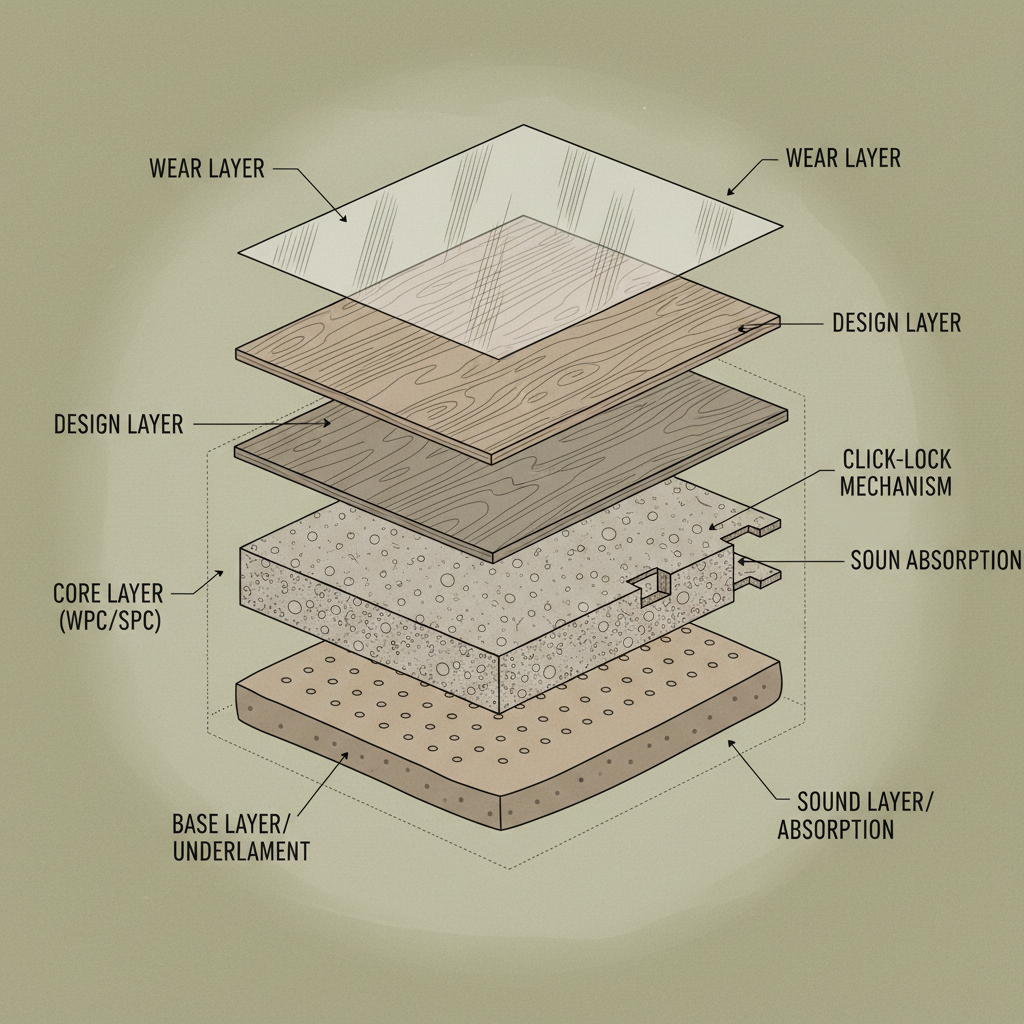
Stone Plastic Composite (SPC) is engineered through a precise fusion of limestone powder and polyvinyl chloride (PVC), creating a dense core that is inherently stable. This composition minimizes the thermal expansion and contraction typically associated with traditional vinyl, making it suitable for diverse climatic conditions.
From a manufacturing perspective, the integration of high-quality stabilizers and foaming agents ensures that the core remains non-toxic and structurally sound. This results in a product that can withstand significant vertical loads without permanent deformation.
When evaluating wholesale spc flooring, professional buyers prioritize wear layer thickness and core density. The wear layer, typically measured in mils, determines the product's resistance to abrasion and scratching, which is critical for commercial environments like hospitals or retail stores.
Furthermore, the importance of certifications such as CE, ISO9001, and Floorscore cannot be overstated. These benchmarks ensure that the materials meet strict environmental and safety standards, specifically regarding formaldehyde emissions and VOC levels, which impact indoor air quality.
Beyond structural specs, the surface treatment—including anti-slip and antibacterial coatings—plays a vital role. In moisture-prone areas, the inherent waterproof nature of the SPC core prevents mold growth and structural warping, reducing long-term maintenance costs.
The high density of SPC provides exceptional durability, but it introduces a challenge regarding sound transmission. Because the material is rigid, impact noise can travel more easily through the subfloor compared to softer LVT or cushioned vinyl products.
Additionally, the thermal conductivity of the stone-composite core allows for efficient heat transfer, making these floors highly compatible with underfloor heating systems. The stability of the core ensures that the planks do not buckle under varying temperature gradients.
Comparing SPC to other vinyl options reveals a clear trade-off between flexibility and stability. While LVT offers a softer feel, it is more prone to indentations under heavy furniture. SPC, conversely, provides a flat, rigid surface that is ideal for installations over imperfect subfloors.
The following assessment evaluates various flooring configurations based on normalized engineering ratings for durability, moisture resistance, and ease of installation.
In a typical commercial deployment, such as a university corridor or a healthcare facility, the primary requirement is a surface that minimizes downtime. The click-lock installation mechanism of wholesale spc flooring allows for rapid replacement of damaged planks without needing to uninstall the entire floor.
Furthermore, for facilities requiring high hygiene standards, the non-porous nature of the SPC surface prevents the absorption of liquids and contaminants. When combined with specialized welding tools and adhesives for edges, it creates a seamless barrier that is easy to sanitize.
The flooring industry is shifting toward sustainable production by increasing the content of recyclable materials. The use of calcium carbonate—a natural mineral—in the SPC core reduces the overall reliance on virgin plastics, lowering the carbon footprint of the manufacturing process.
Moreover, the development of adhesive-free installation methods is a key step toward a circular economy. By eliminating toxic glues, the flooring can be disassembled and recycled at the end of its lifecycle, rather than being sent to a landfill.
Future R&D is focusing on bio-based plasticizers and improved lacquers that reduce emissions to zero formaldehyde. This ensures that the transition to sustainable materials does not compromise the technical performance or safety of the product.
Selecting the right configuration requires a deep understanding of the relationship between the application environment and the technical specs. A residential setup has vastly different needs than a heavy-duty industrial warehouse.
Procurement managers should evaluate the balance between the thickness of the wear layer and the overall cost per square foot. Over-specifying for a low-traffic area leads to unnecessary expenditure, while under-specifying for a commercial hub leads to premature failure.
The table below provides an evaluation framework for matching flooring configurations to specific use cases based on industry baselines.
| Configuration Type | Wear Layer | Core Density | Recommended Use Case |
|---|---|---|---|
| Basic Configuration | 0.3mm | Standard | Low-traffic Residential |
| Standard Configuration | 0.5mm | High | Office/Retail Spaces |
| High-Duty Configuration | 0.7mm | Ultra-High | Hospitals/Clinics |
| Precision Configuration | 0.5mm | Medium | Educational Facilities |
| Automated Configuration | 0.7mm | High | Light Industrial/Labs |
| Industry Baseline | 0.3-0.5mm | Standard | General Purpose Commercial |
The primary difference lies in the core composition. LVT (Luxury Vinyl Tile) uses a flexible vinyl core, whereas SPC (Stone Plastic Composite) incorporates a high percentage of limestone powder. This makes SPC significantly more rigid, providing better stability against temperature fluctuations and allowing it to be installed over slightly uneven subfloors without "telegraphing" the imperfections.
The wear layer is the top transparent coating that protects the design layer. In commercial settings, a thicker wear layer (typically 0.5mm or higher) is essential to resist abrasion from footwear and equipment. A thinner layer may lead to premature fading or scratching in high-traffic areas, thereby increasing the total cost of ownership due to more frequent replacement cycles.
Yes, SPC is highly compatible with underfloor heating. Its dimensional stability ensures that the planks do not expand or contract excessively when exposed to heat. However, it is crucial to verify the manufacturer's maximum operating temperature to ensure the structural integrity of the core and the stability of the click-lock joints are maintained.
Buyers should look for CE and ISO9001 for quality management, and ISO14001 for environmental standards. Additionally, Floorscore and RoHS certifications are critical for confirming that the flooring is free from harmful phthalates and low in VOC emissions, which is a mandatory requirement for many government and healthcare tenders.
Since SPC is a rigid material, it can be noisy. The most effective solution is the integration of an acoustic underlayment, such as IXPE or EVA foam, either pre-attached to the plank or installed separately. This layer absorbs impact noise and reduces the decibel level of foot traffic, making the environment more suitable for offices and apartments.
Evaluate suppliers based on their ability to provide comprehensive technical data sheets, a history of international certifications, and customized service options. A reliable manufacturer should be able to offer specific adjustments to size, color, and surface patterns to meet the unique requirements of different regional markets and application environments.
The adoption of wholesale spc flooring represents a pragmatic response to the demand for surfaces that combine the aesthetics of natural materials with industrial-grade performance. The findings suggest that while rigidity is the core strength of SPC, the integration of acoustic layers and sustainable manufacturing is what will define the next generation of commercial flooring.
For procurement professionals, the focus must remain on the correlation between wear layer specifications and the actual traffic load of the intended environment. By leveraging a strategic selection matrix and prioritizing certified sustainable materials, businesses can ensure a long-term ROI while contributing to a circular economy. For more detailed specifications on modern wall and floor solutions, visit www.enliofloor.com/wall-coverings.html.