Procuring high-performance commercial flooring often leads architects and facility managers to search for a detailed homogeneous vinyl flooring price list to balance upfront costs with long-term durability. In high-traffic environments such as healthcare facilities and educational institutions, the choice between material compositions directly impacts the lifecycle cost and maintenance frequency of the installation.
The complexity of pricing in the vinyl sector arises from the intersection of material purity, wear layer thickness, and surface treatments. For sectors requiring stringent infection control, the investment in heat-welded seams and non-porous surfaces is not merely an aesthetic choice but a regulatory necessity to ensure sterilization and hygiene.
This technical analysis examines the variables that influence the commercial value of homogeneous vinyl and how to evaluate these costs against performance metrics. For those exploring diverse surface options, exploring a homogeneous vinyl flooring price list can provide a baseline for comparing resilient sheet products across different application scenarios.


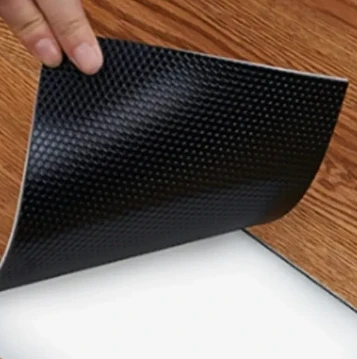
Unlike layered products, homogeneous vinyl consists of a single, uniform layer of material throughout its entire thickness. This structural integrity means that the color and pattern are consistent from the surface to the base, preventing the "worn-through" look common in lower-grade alternatives.
From a cost perspective, the purity of the PVC resin and the quality of the plasticizers used significantly affect the final price. Higher-grade formulations enhance wear resistance and reduce the emission of volatile organic compounds (VOCs), aligning with international standards like FloorScore and CE.
The valuation of commercial flooring is heavily tied to its functional capabilities. Key metrics such as anti-slip ratings, scratch resistance, and antibacterial properties are not just additives but are integrated into the material matrix during the production process.
Maintenance requirements serve as a primary cost driver. For instance, no-polish solutions reduce the need for recurring stripping and waxing, which lowers the total cost of ownership (TCO) despite a potentially higher initial acquisition cost found in a standard price list.
Environmental certifications also add a premium. The integration of recyclable materials and the elimination of harmful substances, such as 0 formaldehyde emissions, reflect a shift toward a circular economy and sustainable architecture.
When selecting flooring, engineers must weigh the uniformity of homogeneous vinyl against the specialized layering of heterogeneous options. Heterogeneous flooring, such as the Finequin series, utilizes a multi-layer approach—comprising a back layer, a coated core, and a wear layer—to achieve specific acoustic or aesthetic goals.
This distinction dictates the procurement strategy. While a homogeneous vinyl flooring price list might suggest a higher cost for raw material purity, the lack of delamination risk over decades of use often justifies the investment in critical infrastructure projects.
Evaluating the value of flooring requires looking beyond the initial purchase price. A comprehensive assessment includes the cost of installation, the frequency of restorative maintenance, and the projected lifespan before replacement is required.
For high-traffic healthcare segments, the superior infection control provided by heat-welded seams creates a seamless environment that prevents bacterial growth, significantly reducing the risk of healthcare-associated infections.
In hospital operating rooms and laboratories, the deployment of homogeneous vinyl follows a strict engineering workflow. The priority is the elimination of joints; hence, the use of high-quality welding rods and heat-welding tools is critical to ensure the floor is completely waterproof and moisture-proof.
This approach eliminates the risk of liquid penetration into the subfloor, which is a primary cause of mold and antibacterial failure in less rigorous installations. The result is a surface that withstands harsh chemical disinfectants without degradation of the wear layer.
The industry is moving toward adhesive-free installation methods to enhance the circularity of the product. By removing traditional glues, the flooring can be more easily reclaimed and recycled at the end of its service life, reducing the environmental footprint of large-scale renovations.
Furthermore, the development of bio-based plasticizers is reducing the reliance on petroleum-derived chemicals. This shift is driven by global sustainability certifications and a growing demand for "healthy buildings" that prioritize indoor air quality and non-toxic materials.
Integration of advanced weaving and jacquard techniques, as seen in the Fleme series, also allows for highly textured, three-dimensional designs that maintain the technical properties of commercial vinyl while meeting the aesthetic demands of luxury hotel and corporate office environments.
Selecting the right material requires a matrix-based approach where the intended use case is mapped against technical specifications. A procurement officer should not look at a price list in isolation but rather in the context of the expected foot traffic and sterilization requirements.
For instance, a university corridor with high abrasion requires maximum wear resistance, whereas a kindergarten requires acoustic absorption and impact safety. The following framework provides a baseline for categorizing flooring configurations based on industry needs.
By aligning the product configuration with the deployment scenario, organizations can optimize their budget without compromising on the critical safety and hygiene standards required for commercial occupancy.
| Configuration Type | Primary Specification | Operating Factor | Recommended Use Case |
|---|---|---|---|
| Standard Homogeneous | Consistent Wear Layer | High Durability | Hospital Corridors |
| Acoustic Heterogeneous | Damping Core Layer | Noise Reduction | Educational Spaces |
| High-Duty Industrial | Enhanced Chemical Resistance | Extreme Abrasion | Laboratory Floors |
| Decorative Texture | Jacquard Weaving | Aesthetic Appeal | Hotel Lobbies |
| Eco-Friendly Circular | Adhesive-Free/Recyclable | Low Emission | Green Certified Offices |
| General Purpose | Multi-Layered Versatility | Balanced Cost | Retail Outlets |
Price variations are primarily driven by the purity of the PVC resin, the thickness of the material, and the inclusion of specialized surface treatments. High-performance options that offer "no-polish" capabilities or antibacterial properties typically command a premium because they reduce long-term maintenance labor costs and enhance hygiene in clinical settings.
Heat welding uses a matching vinyl welding rod to fuse seams together, creating a monolithic, watertight surface. This is critical for infection control as it eliminates gaps where moisture, bacteria, and dirt can accumulate, making the floor suitable for environments requiring frequent sterilization with aggressive chemicals.
While designed for commercial use, it can be installed residentially. However, due to its high durability and technical nature, it is often more expensive than residential LVT. It is recommended for home areas with high traffic or those requiring medical-grade hygiene, such as home clinics or workshops.
Homogeneous vinyl generally has a longer lifespan in high-abrasion areas because the wear layer is the same as the rest of the product; as the surface wears, the appearance remains consistent. Heterogeneous vinyl depends on the thickness of its specific wear layer; once that layer is breached, the core is exposed, necessitating replacement.
Look for certifications such as ISO14001, FloorScore, and RoHS. Additionally, evaluate the product's recycled content and the installation method. Adhesive-free options are significantly more sustainable as they eliminate toxic glues and allow for easier material recovery during renovation cycles.
No-polish flooring is designed to maintain its luster without the need for wax or restorative polishing. Maintenance typically involves regular cleaning with pH-neutral detergents and occasional deep scrubbing with an automatic scrubber, significantly lowering the operational cost compared to traditional vinyl.
The analysis of a homogeneous vinyl flooring price list reveals that the initial capital expenditure is a secondary metric compared to the total lifecycle cost. The ability of a single-layer structure to withstand extreme abrasion while maintaining strict hygiene standards makes it the technical benchmark for healthcare and industrial environments.
For decision-makers, the practical implication is clear: prioritize material purity and installation integrity—such as heat-welded seams—over the lowest unit price. Integrating sustainable, adhesive-free solutions not only meets current regulatory demands but ensures that the facility remains adaptable to future circular economy standards. Those seeking high-performance alternatives can find further technical details on diversified surface options at homogeneous vinyl flooring price list specifications.